Emotional intelligence skills in sales leadership improves performance
With the explosion of AI applications in revenue growth functions, from sales enablement, forecasting, and performance analysis, you might think the role of sales leadership just got a lot easier.
It’s a reasonable assumption.
AI applications can provide faster access to relevant data from which to inform data-driven decisions that are relevant to improving sales performance.
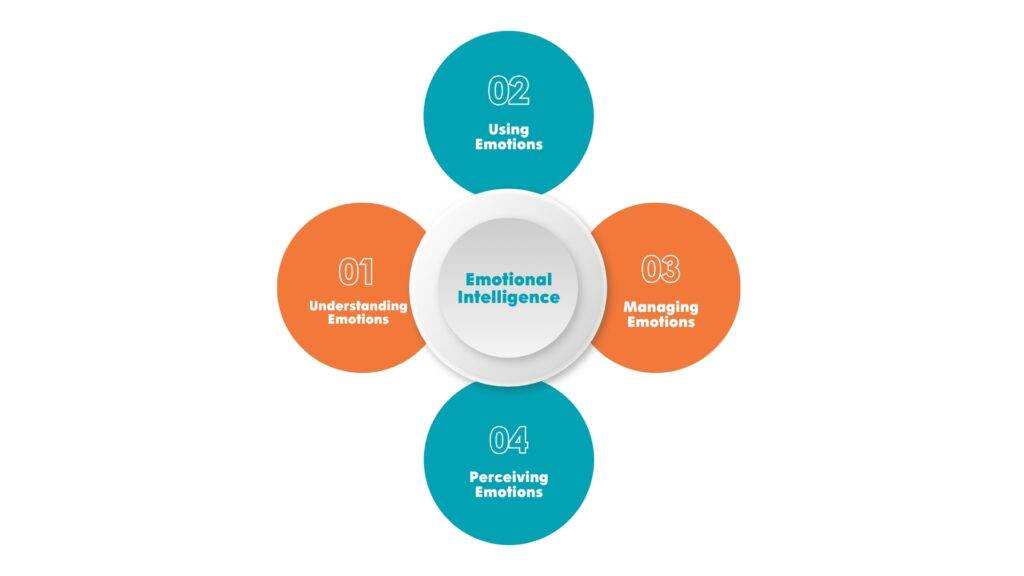
However, as you’ll appreciate, sales leadership is more than statistics and AI capabilities. It’s about leading a team. This requires a host of capabilities, including high degrees of emotional intelligence skills.
The role of a sales leader is to guide, develop, support and encourage a sales team to perform at their best in order to reach a company’s sales targets.
This includes empathy towards teams who have put boundless energy and commitment into deals which don’t land. Encouraging teams to step outside their comfort zone in order to improve outcomes despite challenges and problems.
Emotional intelligence skills in sales leadership increases revenue
Leaders with high emotional intelligence (EQ) have strong self-awareness and regulate it through self-management. A sales leader who isn’t capable of calmly navigating difficult conversations with prospects puts potential new business opportunities at risk.
High EQ leaders are adept at managing change and embracing new strategies to benefit from the opportunities that change brings. They possess the resilience to overcome setbacks and the creativity to identify opportunities for growth.
They take responsibility for being accountable to their team, the company and themselves.
They excel at communication and create the right blend of urgency and reflection to inspire and align their team towards common goals.

Emotional intelligence skills in sales leadership increases customer lifetime value
A critical aspect of sales success is the ability to build, develop and maintain relationships with clients.
According to Salesforce 89% of buyers are more likely to make a purchase when they feel understood by sellers.
This is the superpower of the emotionally intelligent sales leader. They are skilled at being empathetic towards the goals and challenges facing clients. They have the social awareness to understand the needs of buyers. They build trust and collaborate with clients. This helps to shift the relationship from transaction to being an integrated long-term partner to their business, which increases customer lifetime value.
Emotional intelligence skills in sales leadership helps to attract and retain top talent
Employee turnover can significantly impact revenue growth, as it leads to productivity losses, knowledge transfer and disruption to customers.
High EQ sales leaders through their self and social awareness attract and retain top talent by creating a supportive and inclusive work environment where employees feel valued, respected, and challenged.
When employees have a high EQ leader their satisfaction and loyalty increases.
According to Passive Secrets: Employees with empathetic leaders report an increase in engagement (76%) and creativity (61%), leading to higher performance levels.
Emotional intelligence skills in sales leadership improves cross functional collaboration and innovative solutions
It’s critical to build strong effective teamwork across departments to increase sales success. Sales teams can’t work in isolation. They depend on input, ideas and advice from internal specialists such a technicians, operations and finance to create proposals and solutions for prospects and clients.
The high EQ sales leader plays a pivotal role in facilitating effective collaboration. They increase it by promoting trust, communication, and mutual respect among team members. They are skilled at navigating interpersonal dynamics, leading the collective intelligence of teams to drive innovative solutions for future and existing clients.
In Summary
While sales metrics and AI applications remain important, the role of an emotionally intelligent (EQ) sales leader in driving revenue growth cannot be underestimated.
However, priortising EQ development across all functions of the organisation can cultivate a culture of empathy, collaboration, and adaptability, laying the foundation for sustainable revenue growth in an increasingly competitive marketplace.
NEXT STEPS
- Sign up to receive my V.I.T.A.L. insights newsletter for revenue growth
- Register for notification of future free live events about securing, sustaining, and scaling new business
- Connect with me on LinkedIn
- Read about AI in sales here
- Listen to the Lead To Succeed podcast on emotional intelligence here
About the Author
Rebecca Jenkins has extensive leadership and revenue growth experience. This includes securing, retaining, and growing multiple profitable client accounts in her previous business.
Rebecca is a specialist consultant in B2B revenue growth and the author of Winning Big In Sales
Her award-winning V.I.T.A.L. method delivers results for businesses wanting a proven way to profitably increase revenue and secure long-term large client accounts. You can watch and read client case studies here on the RJEN website.